
/
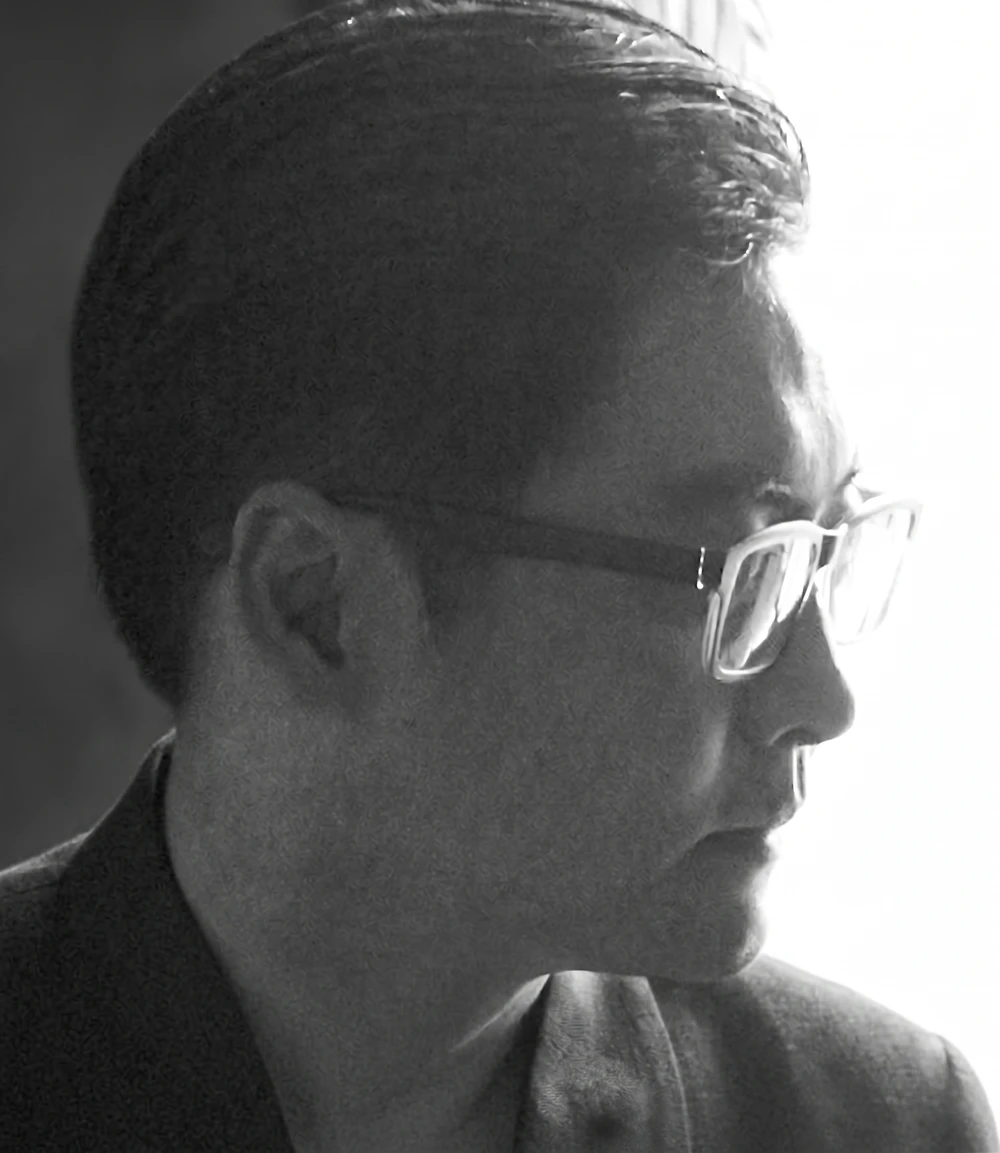
Moving between digital and contemporary art, building a world at the threshold of the real and the imagined. 遊走於數位藝術與當代藝術之間,建構現實與幻想交界的世界。
Casimir (Lee Chang-hsien, b. 1978) is a Taiwanese contemporary artist and a graduate of the Department of Plastic Arts (Oil Painting) at Da-Yeh University. His practice spans digital art, printmaking, mixed media and contemporary art, sustained by a long inquiry into the independent value — and the future — of the digital medium in art.
The female figure is his principal visual language. Weaving together Art Nouveau, Symbolism, mythic narrative and contemporary culture, he builds a psychic terrain suspended between the real and the imagined. His figures hold a delicate, almost tangible presence; around them the world flattens into decorative architecture — plants, animals, religious signs and occult motifs interlaced into a space of layered metaphor. Beneath the ornate and intricate surface runs a steady observation of human nature, desire, faith, lived experience and the contemporary condition.
Women remain among the most important subjects in his work. They appear not as objects to be looked at, but as emblems of emotion and inner consciousness. Each person carries a singular life and presence — in the beauty of the outward form, and in the temperament gathered through character and memory. Through the female figure, the work seeks to render the most truthful and complex side of human feeling.
His style is shaped deeply by Alphonse Mucha, Gustav Klimt and Egon Schiele, while drawing in the languages of Impressionism, Pointillism, Cubism and contemporary digital art. Deconstructed and transformed, these idioms across eras and schools converge into a personal style at once classical in spirit and contemporary in view. His works Goddess of Gate and The Princess of Hell were invited to the special exhibition Timeless Mucha — The Magic of Line, making him one of the few Taiwanese artists to enter a cross-generational dialogue with Mucha.
Rather than treating digital tools as a way to imitate traditional media, Casimir is drawn to what digital art alone makes possible. For years he has explored how digital practice might break beyond the frame of commercial illustration and design to stand as work of independent artistic value — not reproducing the texture of oil or drawing, but developing a contemporary visual language native to the medium, in answer to an age where technology and art continually converge.
In recent years his work has extended into mixed media, folding the digital image into a broader process that joins printmaking, industrial materials, found objects and non-traditional media. The digital work is no longer a final result but a bridge between the virtual and the physical — a practice that crosses surface, object and space.
Since 2016, Casimir has shown his work in Taiwan and internationally — selected in the New Media category of the Yilan Award, presented at UNKNOWN ASIA in Osaka and Independent Taipei Art Fair, and the subject of a major solo exhibition, CASIMIR ART — Lee Chang-hsien Digital Printmaking, at the National Taiwan Arts Education Center. His work is held by collectors across Asia and around the world.
For Casimir, art is not simply the making of beauty but a way of understanding the world and answering his time. As technology advances and media keep shifting, art must remain forward-looking and experimental — challenging inherited frameworks to seek a new language and new value for the present.
“The pursuit of artistic expression must remain forward-looking.”
CASIMIR(李長憲,1978 年生)為台灣當代藝術家,畢業於大葉大學造形藝術學系油畫組。創作橫跨數位藝術、版畫、複合媒材與當代藝術領域,長期關注數位媒材在藝術中的獨立價值與未來發展可能。
其作品以女性形象作為主要視覺語言,融合新藝術運動、象徵主義、神話敘事與當代文化元素,建構出介於現實與幻想之間的精神場域。畫面中的人物往往擁有細膩而真實的質感,而背景則透過扁平化的裝飾結構、植物、動物、宗教符號與神秘學元素交織成具有多重隱喻的視覺空間。華麗而繁複的畫面之下,隱藏著對於人性、慾望、信仰、生命經驗與當代社會現象的觀察與思考。
女性始終是 CASIMIR 創作中最重要的主題之一。在其作品中,女性並非被觀看的客體,而是情感與精神意識的象徵。每個人都擁有獨特的生命經驗與個人魅力,無論是外在形體所展現的美感,或是內在性格與記憶所累積的氣質,都成為創作的重要靈感來源。透過對女性形象的描繪,作品試圖呈現人類情感中最真實而複雜的一面。
創作風格深受阿豐斯.慕夏、古斯塔夫.克林姆與埃貢.席勒等藝術家影響,同時融合印象派、點描派、立體派以及當代數位藝術的表現方式。這些不同時代與流派的藝術語彙經過重新解構與轉化,逐漸形成兼具古典精神與當代視角的個人風格。其作品《門神》與《地獄公主》曾獲邀參與《永恆慕夏-線條的魔術》特展,成為少數與慕夏風格進行跨時代對話的台灣藝術家之一。
相較於將數位工具視為模仿傳統媒材的手段,CASIMIR 更關注數位藝術本身所具備的獨特可能性。多年來持續探索數位創作如何突破商業插畫與設計領域的框架,成為具有獨立價值的藝術作品。創作過程中並不刻意追求油畫或素描的質感再現,而是透過數位媒介的特性發展屬於當代的視覺語言,試圖回應科技與藝術不斷交融的時代環境。
近年來,創作逐漸延伸至複合媒材領域,將數位圖像轉化為創作流程中的一部分,結合印刷技術、工業材料、現成物以及非傳統藝術媒介,探索藝術在材質與形式上的更多可能。數位作品不再只是最終成果,而成為連結虛擬與實體的重要媒介,形成跨越平面、物件與空間的創作實踐。
自 2016 年以來,CASIMIR 持續於台灣與國際展覽發表作品,曾入選宜蘭獎新媒體藝術類、參與日本大阪 UNKNOWN ASIA、Independent Taipei 藝術博覽會,並於國立臺灣藝術教育館舉辦大型個展《CASIMIR ART 李長憲數位創作版畫展》,完整呈現多年來的創作發展與風格演變。其作品亦受到亞洲及海外藏家收藏,收藏遍及世界各地。
對 CASIMIR 而言,藝術並非單純的美感製造,而是一種理解世界與回應時代的方式。在科技快速演進與媒介持續變動的今日,藝術創作更應保持前瞻性與實驗精神,不斷挑戰既有框架,尋找屬於當代的新語言與新價值。
「持續追求藝術的表現需具有前瞻性。」